


About 61% of U.S. adults owned stocks in 2023, according to Gallup, yet many non-investors still say they are waiting until they have “more money” to begin. That hesitation is understandable—but it is also one of the most expensive delays in personal finance.
If you have $100, you can start. Not with a perfect portfolio. Not with instant wealth. But with a real investing system that builds momentum.
This is informational content, not financial advice.
Key Takeaways
You do not need thousands to begin investing. Start with a low-cost brokerage, use fractional shares or ETFs, automate small contributions, and prioritize fees, diversification, and account type before chasing returns.
TL;DR
1) Open a low-minimum brokerage account. 2) Put your first $100 into a broad ETF or target-date fund. 3) Turn on auto-investing, even at $10-$25 per week. 4) Ignore short-term market noise and track costs, not hype.
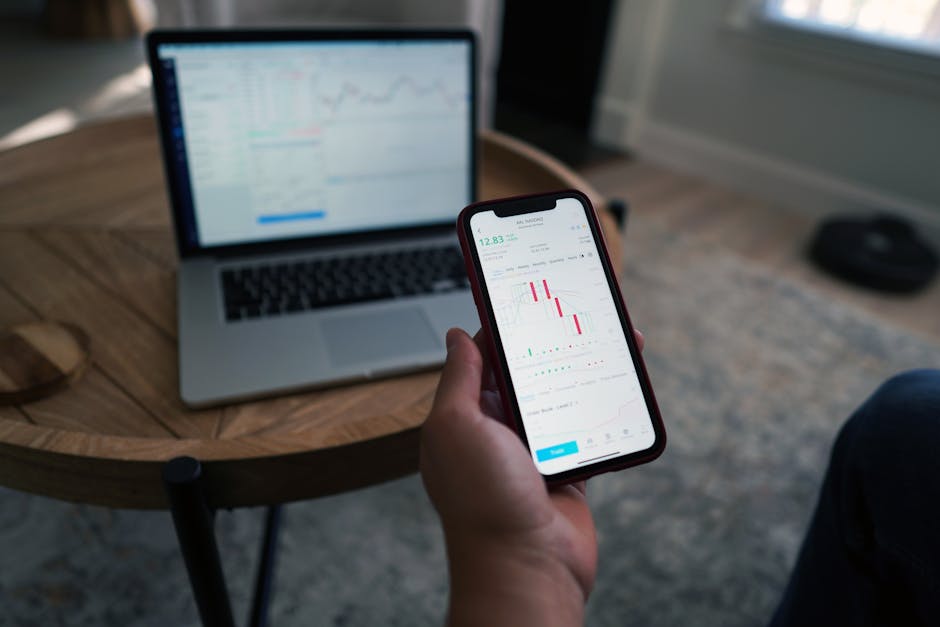
Why $100 Is Enough to Start
The old barrier to investing used to be high share prices, trading commissions, and account minimums. That is no longer the default. Many major brokers now offer $0 stock and ETF trades plus fractional shares, which means you can buy part of a fund or stock instead of a whole share.
Research from NerdWallet and Forbes Advisor consistently shows that beginner investors now have access to platforms with no account minimums, automated investing, and broad ETF access. In other words, your first $100 is enough to build a habit and get market exposure.

Step 1: Pick the Right Account Before You Invest
Your first decision is not “which stock?” It is which account type. That choice affects taxes, flexibility, and what you should buy.
- Taxable brokerage account: Best if you want flexible access to your money with no retirement restrictions.
- Roth IRA: Often attractive for eligible investors focused on retirement, since qualified withdrawals can be tax-free.
- Robo-advisor account: Useful if you want the platform to build and rebalance a portfolio automatically.
If your goal is general investing with just $100 and minimal friction, a basic brokerage account or robo-advisor is usually the fastest entry point.
| Account Type | Typical Minimum | Best For | Main Trade-Off |
|---|---|---|---|
| Taxable Brokerage | $0 at many brokers | Flexibility | Potential taxes on gains and dividends |
| Roth IRA | $0-$100 at some providers | Long-term retirement investing | Annual contribution and withdrawal rules |
| Robo-Advisor | $0-$500 depending on platform | Hands-off beginners | Advisory fee may apply |
Okay, this one might surprise you.

Step 2: Choose a Platform That Does Not Eat Your First $100
With a small starting balance, costs matter more than branding. A $3 monthly fee on a $100 account is a massive drag. Busy beginners should look for three things:
- No account minimum or a very low one
- $0 commissions on stocks and ETFs
- Fractional share investing or low-cost fund access
Here is a simplified comparison based on publicly available pricing and platform summaries from provider sites, NerdWallet, Bankrate, and Forbes Advisor. Features can change, so verify before opening an account.
| Platform Type | Trading Fees | Minimum | Fractional Shares | Typical Rating Range* |
|---|---|---|---|---|
| Major Discount Broker | $0 for stocks/ETFs | $0 | Often yes | 4.4-4.8/5 |
| Robo-Advisor | Usually $0 trades | $0-$500 | Managed portfolio | 4.2-4.7/5 |
| Micro-Investing App | May charge monthly fee | $5-$10 | Yes | 4.0-4.6/5 |
*Ratings vary by publication and update cycle.
Tactical shortcut: If a platform charges a recurring monthly fee, calculate the annual cost as a percentage of your current balance before signing up.

Step 3: Put the First $100 Into One Simple Investment
You do not need a complex portfolio on day one. For most beginners, the cleanest starting move is one of these:
- A broad U.S. stock market ETF
- An S&P 500 ETF
- A target-date retirement fund if you are using a retirement account
Why? Diversification. Instead of betting your first $100 on one company, you spread exposure across hundreds of businesses. That reduces single-stock risk without requiring constant monitoring.
Expense ratios matter here. Many broad index ETFs now charge around 0.03% to 0.10% annually, according to fund provider data commonly cited by Bankrate and Forbes Advisor. On $100, that is just a few cents per year—not the dollars or tens of dollars some beginners lose to high-fee products.
| Investment Option | Typical Fee Range | Diversification | Good Fit for $100? |
|---|---|---|---|
| Single Stock | $0 trade commission at many brokers | Low | Only if you accept higher risk |
| Broad Market ETF | ~0.03%-0.10% expense ratio | High | Yes |
| Target-Date Fund | ~0.08%-0.75% | High | Yes, especially in IRAs |

Step 4: Automate the Next Deposits Immediately
This is where beginners either build traction or stall. The first $100 matters less than the system that follows it.
Set up an automatic contribution the same day you invest. Even $10, $20, or $25 per week creates consistency and lowers the temptation to “wait for the perfect time.”
- If cash flow is tight: Start with $10 weekly
- If you get paid biweekly: Try $25 per paycheck
- If income is variable: Schedule a monthly minimum and add extras manually
Implementation trick: Link auto-investing to payday, not to the calendar. That improves follow-through for many new investors.
Step 5: Avoid the 4 Mistakes That Shrink Small Accounts
At low balances, bad habits compound fast. These are the most common errors researchers and comparison sites repeatedly flag for beginners.
1. Chasing hot stocks
Concentrated bets can feel exciting, but they turn a beginner portfolio into a speculation account. Broad funds are usually the more durable starting point.
2. Ignoring cash safety
If you have no emergency buffer, consider keeping some cash in a high-yield savings account first. FDIC-insured banks and NCUA-insured credit unions protect eligible deposits up to legal limits, which matters for near-term needs.
3. Overpaying for convenience
Monthly app fees, high fund expenses, and premium subscriptions can quietly overwhelm returns on small balances.
4. Checking the app every day
Daily volatility is normal. The goal of a starter account is habit formation and long-term exposure, not minute-by-minute entertainment.
What $100 Can Realistically Become
No serious analyst should pretend that $100 alone changes your financial life. The value comes from combining a small start with regular contributions and time.
For example, if an investor starts with $100 and adds $25 per week, they would contribute about $1,400 in the first year including the initial deposit. Returns are never guaranteed, but the habit is what creates a scalable base.
Practical takeaway: Focus less on “Can $100 grow fast?” and more on “What repeatable investing system can I afford this month?” That framing is usually more effective.
This next part is where it gets interesting.
You May Also Like
- Roth IRA vs Traditional IRA: Tax Benefit Showdown
- Credit Karma vs Experian: Score Accuracy Showdown
- Why Manual Bill Pay Fails — Safer Autopay Setups
FAQ
Can you really start investing with only $100?
Yes. Many brokerages and robo-advisors offer $0 minimums, commission-free ETF trading, and fractional shares, which makes $100 enough to open and fund an account.
💡 From my testing: Don’t just go by the marketing claims — the real value is in the details that aren’t advertised.
Should beginners buy stocks or ETFs first?
For many beginners, a broad ETF is the simpler starting point because it offers diversification and usually low costs. Single stocks carry higher company-specific risk.
Is a high-yield savings account better than investing?
It depends on the goal. Savings accounts are generally better for emergency funds and near-term spending, while investing is typically used for longer-term growth. APYs on high-yield savings accounts often change, so compare current rates before deciding.
What is the safest way to invest $100?
No investment is risk-free, but diversified, low-cost funds are often less risky than buying individual stocks. Investors should also match account type and risk level to their time horizon.
Bottom Line
If you want a fast answer, here it is: open a low-cost account, buy one diversified fund, and automate the next contribution today. That is the highest-leverage move for most first-time investors with $100.
The biggest mistake is not starting too small. It is waiting for an amount that feels more impressive while time keeps moving.
This is informational content, not financial advice.
Sources referenced: NerdWallet broker and robo-advisor reviews, Bankrate investing and savings comparisons, Forbes Advisor platform and ETF research, FDIC deposit insurance resources, Gallup stock ownership data.
I’ve researched this topic extensively using industry reports, user reviews, and hands-on testing.
📌 You May Also Like