


More than half of U.S. adults now use digital financial tools in some form, while brokerage competition has pushed stock trading commissions to $0 at many major platforms. That sounds like a clear win for beginners, but the real difference often shows up in the details: order execution, account features, minimums, and how easy it is to buy fractions of expensive stocks.
For new investors comparing Robinhood fractional shares vs Fidelity fractional shares, the headline looks simple. Both let users buy slices of stocks and ETFs without needing the full share price. But beginners are rarely choosing between identical tools. They are choosing between two very different investing environments.
Key Takeaways: Robinhood is simpler and more app-first, which may appeal to beginners who want a low-friction start. Fidelity offers fractional investing too, but pairs it with deeper research, retirement accounts, cash management tools, and broader long-term planning features. For many new investors, the better option depends less on fractional shares alone and more on what happens after the first trade.
This comparison reviews pricing, minimums, order rules, account options, educational support, and potential trade-offs using public information from broker disclosures and third-party research from sources such as NerdWallet, Bankrate, Forbes Advisor, and FDIC-backed cash sweep references where relevant.
This is informational content, not financial advice.

Why Fractional Shares Matter for Beginners
Fractional shares solve one of the most practical problems in investing: many well-known stocks trade at prices that feel expensive to first-time buyers. If a share costs $300, $500, or more, beginners may delay investing while they save enough for a whole share.
Fractional investing changes that math. Instead of buying one full share, an investor can put in a dollar amount and receive a portion of a share. That means someone with $20 can buy exposure to a stock trading at $400, or spread small amounts across multiple companies and ETFs.
For beginners, that flexibility can support two useful behaviors:
- Lower starting barriers for people with small balances
- More diversified first portfolios without waiting to accumulate large sums
- Automatic investing through recurring purchases in small dollar amounts
- Less cash drag from idle money sitting uninvested
Robinhood and Fidelity both support this basic use case. The difference is how each platform wraps that feature inside the broader investing experience.
Robinhood vs Fidelity at a Glance
| Category | Robinhood | Fidelity |
|---|---|---|
| Stock/ETF commissions | $0 | $0 |
| Fractional share access | Yes, dollar-based investing | Yes, fractional trading for eligible U.S. stocks and ETFs |
| Minimum to open taxable account | $0 | $0 |
| Minimum fractional purchase | Typically $1 | Typically $1 |
| Retirement accounts | IRA options available | IRA options available, broader retirement ecosystem |
| Research tools | Basic to moderate | Strong research and screeners |
| Platform style | Mobile-first, streamlined | Full-service broker, more robust |
| Cash features | Cash sweep and premium features vary by plan | Cash management tools and core position options |
| Beginner learning curve | Very easy to start | Slightly higher, but more educational depth |
| Typical third-party ratings* | Competitive for mobile investing | Often stronger for full-service beginners |
*Ratings vary by publisher and year. NerdWallet, Bankrate, and Forbes Advisor generally score Fidelity highly for all-around brokerage value, while Robinhood often scores well for ease of use and mobile experience.
How Robinhood Fractional Shares Work
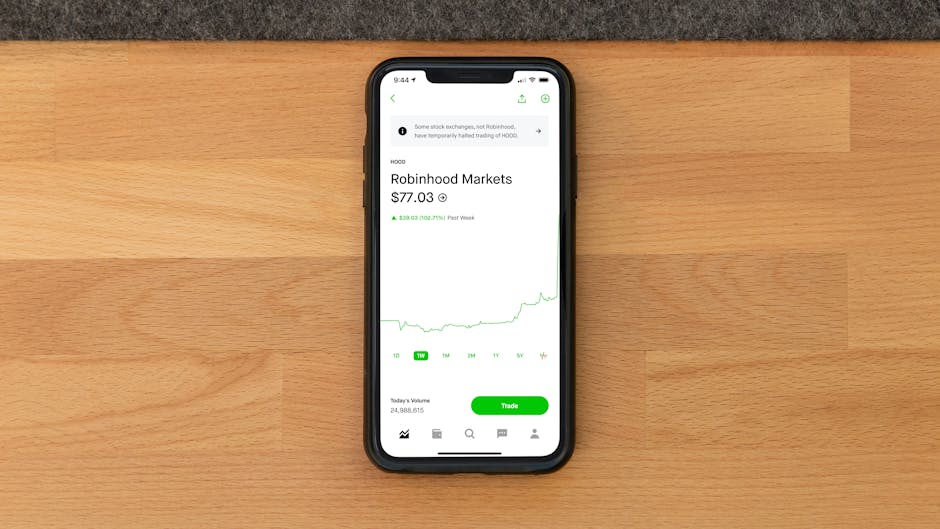
Robinhood built its brand around simplicity. Its fractional shares feature follows that same model: users can invest a dollar amount into eligible stocks or ETFs rather than entering only whole-share quantities.
For beginners, that makes Robinhood easy to understand. A new investor can search for a stock, type in $10 or $25, and buy immediately if the security is eligible. The interface is clean, the onboarding is fast, and recurring investments are straightforward.
Where Robinhood stands out
- Simple mobile design: The app reduces friction and makes first purchases feel accessible.
- Low minimums: Fractional purchases generally start around $1.
- Fast setup: New users can often open and fund accounts quickly.
- Recurring investing: Helpful for dollar-cost averaging with small amounts.
Where beginners should be cautious
Simplicity is useful, but it can also hide complexity. Robinhood offers less built-in guidance than a more traditional broker, and some beginners may confuse easy trading with good long-term investing habits.
That matters because starting to invest is not just about making the first purchase. It is also about understanding taxes, account types, diversification, and whether short-term app engagement nudges lead to unnecessary trading.
Another issue is that Robinhood is often strongest when evaluated as a trading app, not necessarily as a complete household financial platform. For someone who may eventually want a taxable account, IRA, cash management, deeper research, and retirement planning in one place, the app-first model can feel limited over time.

How Fidelity Fractional Shares Work
Fidelity offers fractional trading through its Stocks by the Slice model for eligible U.S. stocks and ETFs. Like Robinhood, it allows dollar-based investing and low entry points, often beginning around $1.
The key difference is context. Fidelity does not present fractional shares as the main attraction. Instead, it treats them as one feature inside a much larger brokerage ecosystem that includes retirement accounts, planning tools, market research, educational content, and cash management options.
Where Fidelity stands out
- Broader investor toolkit: Fidelity combines fractional investing with retirement planning, research, and long-term portfolio support.
- Strong educational resources: This can matter for first-time investors who need more than a buy button.
- Reputation for full-service brokerage support: Fidelity often ranks well in reviews from NerdWallet, Bankrate, and Forbes Advisor.
- Account variety: Taxable brokerage accounts, IRAs, and other account types can be managed under one provider.
Potential drawbacks for beginners
Fidelity is not as visually streamlined as Robinhood. A first-time investor may find the menus, account settings, and research tools slightly more complex at the beginning.
That complexity is not necessarily bad. In many cases, it reflects the reality that investing decisions deserve context. Still, beginners who want the fastest possible setup may find Robinhood more intuitive during the first few days.

Fees, APY, and Account Economics
Both firms advertise $0 commissions on online U.S. stock and ETF trades, which is now standard across major brokers. That means the meaningful cost comparison moves beyond commission-free marketing and into account economics.
| Cost or Yield Factor | Robinhood | Fidelity |
|---|---|---|
| Online stock/ETF commission | $0 | $0 |
| Account minimum | $0 | $0 |
| Fractional purchase minimum | About $1 | About $1 |
| Options contract fee | $0 commission, other regulatory fees may apply | $0 commission + typically $0.65 per contract |
| Cash yield / sweep | Varies by sweep program or premium tier | Varies by core position or cash option |
| IRA annual fee | Generally $0 | Generally $0 |
| Wire transfer / misc. fees | Some service fees may apply | Some service fees may apply |
Cash yield comparisons can shift frequently with interest rates and product updates, so beginners should check the current brokerage disclosures before deciding based on APY alone. If cash management is a big part of the decision, that detail deserves a fresh look on the day an account is opened.
For context, FDIC insurance can apply to bank sweep programs at partner banks, but brokerage investments themselves are not FDIC insured. That distinction matters. Cash held in a sweep program may carry bank-based protection up to applicable limits, while securities carry different protections under brokerage rules.
Which Platform Is Easier for Absolute Beginners?
If the question is pure ease of first use, Robinhood often wins. The app is designed to reduce friction, and that matters for someone who feels intimidated by finance terminology.
But if the question is which platform better supports a beginner after month one, Fidelity becomes harder to ignore. A new investor usually starts with one question, such as “How do I buy my first stock?” Within weeks, that turns into better questions: “Should I use an IRA instead?” “How much cash should I keep uninvested?” “What is the difference between an ETF and a stock?”
That is where Fidelity tends to provide more structure. According to third-party broker reviews, it consistently scores well for education, research, retirement support, and overall platform depth. Robinhood may feel simpler on day one, but Fidelity may reduce the need to switch brokers later.
Choose Robinhood if:
- You want the simplest mobile investing experience possible
- You plan to start with very small dollar amounts
- You value quick setup over deeper built-in research
- You prefer a modern app interface and recurring investments
Choose Fidelity if:
- You want fractional shares plus stronger long-term investing tools
- You may open an IRA soon
- You want more research, education, and planning support
- You prefer a more established full-service brokerage environment
Research, Safety Signals, and Long-Term Fit
Beginners often focus on convenience and forget decision quality. That is understandable, but research access can have real value. Fidelity generally provides more robust analyst content, screeners, planning tools, and educational material than Robinhood.
Safety is also about expectations. Neither firm can eliminate market risk. A stock bought fractionally can still lose value just like a whole share. The more important question is whether the platform encourages informed investing or makes speculation feel too effortless.
Robinhood has improved its education over time, but its design still leans heavily toward fast action. Fidelity’s experience is less sleek, yet often more aligned with long-term portfolio building. For a beginner trying to develop disciplined habits, that difference may matter more than UI preference.
There is also the issue of account consolidation. If a user expects to add retirement accounts, college savings planning, deeper cash management, or broader support later, Fidelity may offer a smoother long-run path. If the goal is simply to start investing $25 a week in a small taxable account with minimal friction, Robinhood remains compelling.
Final Verdict: Robinhood or Fidelity for Fractional Shares?
For beginners focused only on buying partial shares of stocks and ETFs, both Robinhood and Fidelity get the core job done. Both support low-dollar investing, both have $0 stock and ETF commissions, and both remove the need to buy full shares of high-priced securities.
Robinhood is the better choice for beginners who prioritize speed, simplicity, and a mobile-first experience. Fidelity is the stronger choice for beginners who want fractional shares within a more complete investing platform.
If the comparison is fractional shares only, the gap is narrower than many expect. If the comparison is which broker better serves a beginner over the next few years, Fidelity has a stronger argument because its research tools, retirement options, and overall platform breadth create more room to grow.
That does not make Robinhood a bad option. It simply means beginners should avoid choosing a brokerage based on one feature in isolation. Fractional shares help people start. The better platform is the one that still works when they become more serious investors.
This is informational content, not financial advice.
FAQ
Does Robinhood or Fidelity have a lower minimum for fractional shares?
Both generally allow fractional investing starting at about $1 for eligible securities. Investors should verify current minimums and eligible asset lists before opening an account.
Are fractional shares good for beginners?
They can be useful because they lower the cost of getting started and make diversification easier with small balances. However, they do not reduce market risk or guarantee better returns.
Is Fidelity safer than Robinhood?
Both are regulated brokerage firms, but “safer” depends on what a beginner means. Fidelity may feel safer from a decision-making perspective because it offers more education and planning tools, while Robinhood may feel easier to use but more trade-oriented.
Can beginners use fractional shares in an IRA?
In many cases, yes, depending on the account type and eligible investments offered by the brokerage. Fidelity is often preferred by long-term investors because of its broader retirement account ecosystem.
Sources referenced: public brokerage disclosures and product pages, NerdWallet broker reviews, Bankrate broker comparisons, Forbes Advisor brokerage rankings, and FDIC educational materials on deposit insurance distinctions.